Quick tone direction
Use a bridge humbucker into a bright British-style amplifier. Add a low-gain distortion or boost for attack, but keep the sound lean enough for the riff to stay articulate.
- Gain
- Firm crunch with a low-gain push in front
- EQ
- Controlled bass, strong upper mids and bright attack
- Pickup
- Bridge humbucker
- Effects
- Very light ambience; avoid a washed-out rhythm sound
- Tuning
- Standard E
Get this tone on your gear
Keep this song selected. Choose your guitar and amp for playable settings. Subscription required.
The recording
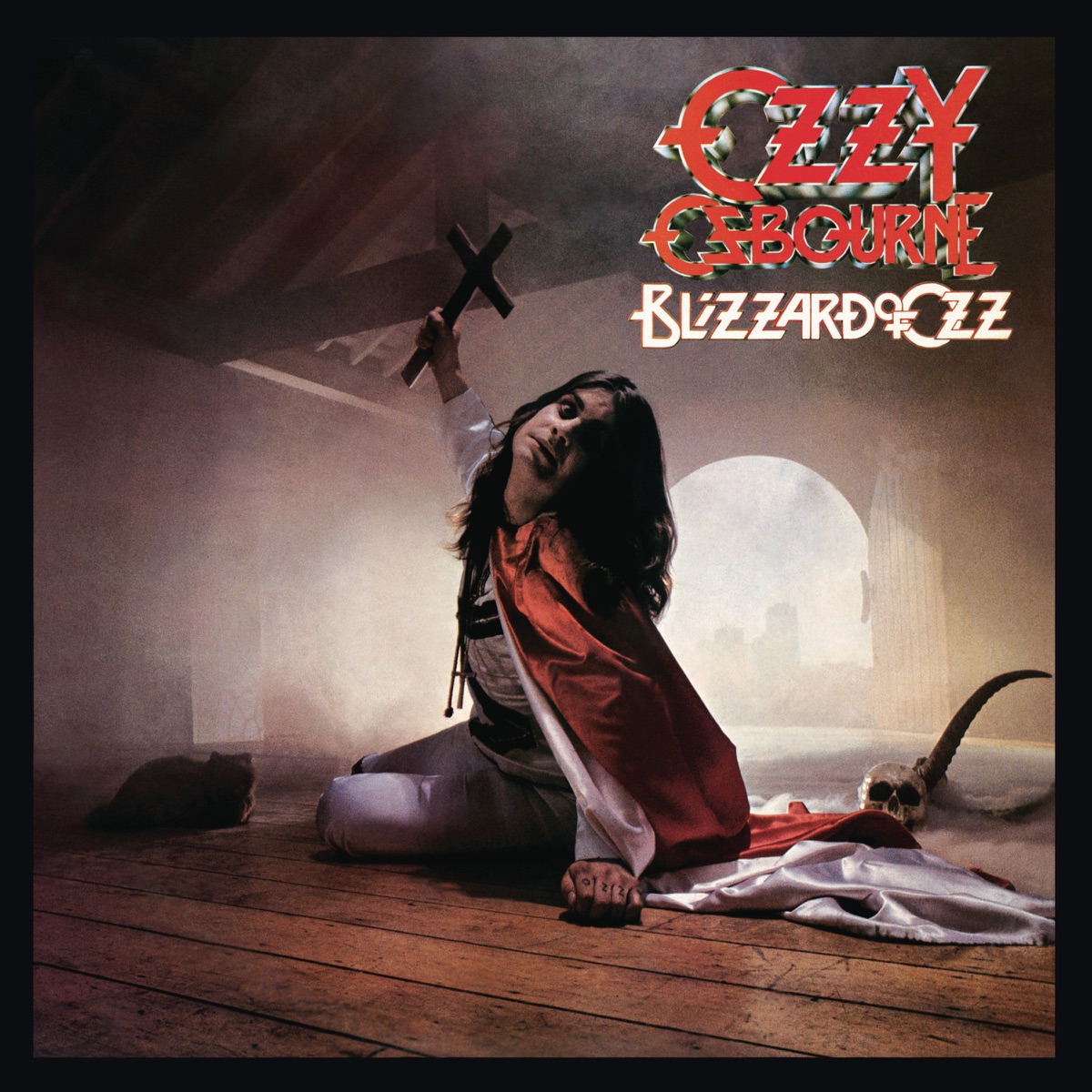
“Crazy Train” is the opening statement of Ozzy Osbourne’s post-Black Sabbath career, recorded for Blizzard of Ozz at Ridge Farm in 1980 after rehearsals at Clearwell Castle. Randy Rhoads wrote and played the signature riff and lead work, while Bob Daisley described the song’s title as arising from a malfunctioning effect that made a train-like chug; Daisley also supplied the lyric contribution. Producer Max Norman recorded Rhoads in a stone room, with the guitarist overdubbing the featured solo three times with striking precision. The tight doubled rhythm creates the track’s wide locomotive drive, while the centered-and-panned lead layers make the solo seem larger than one guitar.
Signal chain · Riff
Original gear

Gibson Les Paul Custom
Guitar · Randy Rhoads · Riff & solo
Rhoads used this Les Paul Custom for the recorded rhythm and lead material, although the isolated-track evidence cannot always prove which of his two principal guitars was used on each individual overdub.

Marshall 100-watt Super Lead/JMP 1959 family
Amp · Randy Rhoads · Riff & solo
Rhoads’s guitar riff and solo on the original Blizzard of Ozz master were recorded through a cranked 100-watt Marshall stack; the exact head and cabinet identities are disputed by the available evidence, with the direct recording accounts identifying the rig only broadly as Marshall. The exact model remains uncertain in the available sources.

Marshall 4x12 cabinet
Cabinet · Randy Rhoads · Riff & solo
The released recording used two 4x12 cabinets in Rhoads’s Marshall stack, but reliable recording evidence does not agree on an exact cabinet model or speaker loading; therefore only the specific Marshall 4x12 family is supported.

MXR Distortion+
Fuzz · Randy Rhoads · Riff & solo
Rhoads identified the Distortion+ as the distortion pedal he kept on his board and left on continuously; recording-specific evidence supports it as part of the core sound, but does not isolate separate rhythm and solo settings.
MXR Ten Band Graphic Equalizer
Pedal · Randy Rhoads · Riff & solo
A detailed Crazy Train reconstruction assigns the MXR ten-band EQ to Rhoads's chain and its midrange shaping, but the surviving artist interview establishes the pedalboard rather than proving its use on every recorded part.
AMS digital delay
Delay · Max Norman / studio processing · Riff
Studio delay processing was used on the rhythm guitars to create a subtle doubled or chorus-like stereo spread; Max Norman specifically recalled 408-millisecond AMS echoes on the album, while the exact unit designation is reported inconsistently.
Alternatives
Practical playing approach
Recreation guidance, not a claim about undocumented studio control positions.
- 1.Execute the main riff with strict, aggressive alternate picking to maintain a tight rhythmic chug.
- 2.Ensure your tone has a pronounced midrange push to emulate the classic Randy Rhoads EQ curve.
- 3.Keep palm mutes consistent during the verses to drive the rhythm forward dynamically.
Frequently asked questions
What gear was used for the Crazy Train guitar tone?
The available research points to Gibson Les Paul Custom into Marshall 100-watt Super Lead/JMP 1959 family. The full reported signal chain and evidence links are listed on this page.
Are the original Crazy Train amp settings documented?
Exact historical knob positions are not reliably documented for most recordings. ToneTwin does not publish generated values as studio fact; it creates playable settings only for the amp and pedals a player selects.
How do I recreate the Crazy Train tone on my own gear?
Use the reported pickup, gain character, effects and signal-chain order as the target, then translate that target to your equipment. The matcher models controls for your selected rig rather than copying undocumented studio numbers.
Researched and reviewed by the ToneTwin Research Team.
Sources