Get this tone on your gear
Keep this song selected. Choose your guitar and amp for playable settings. Subscription required.
The recording
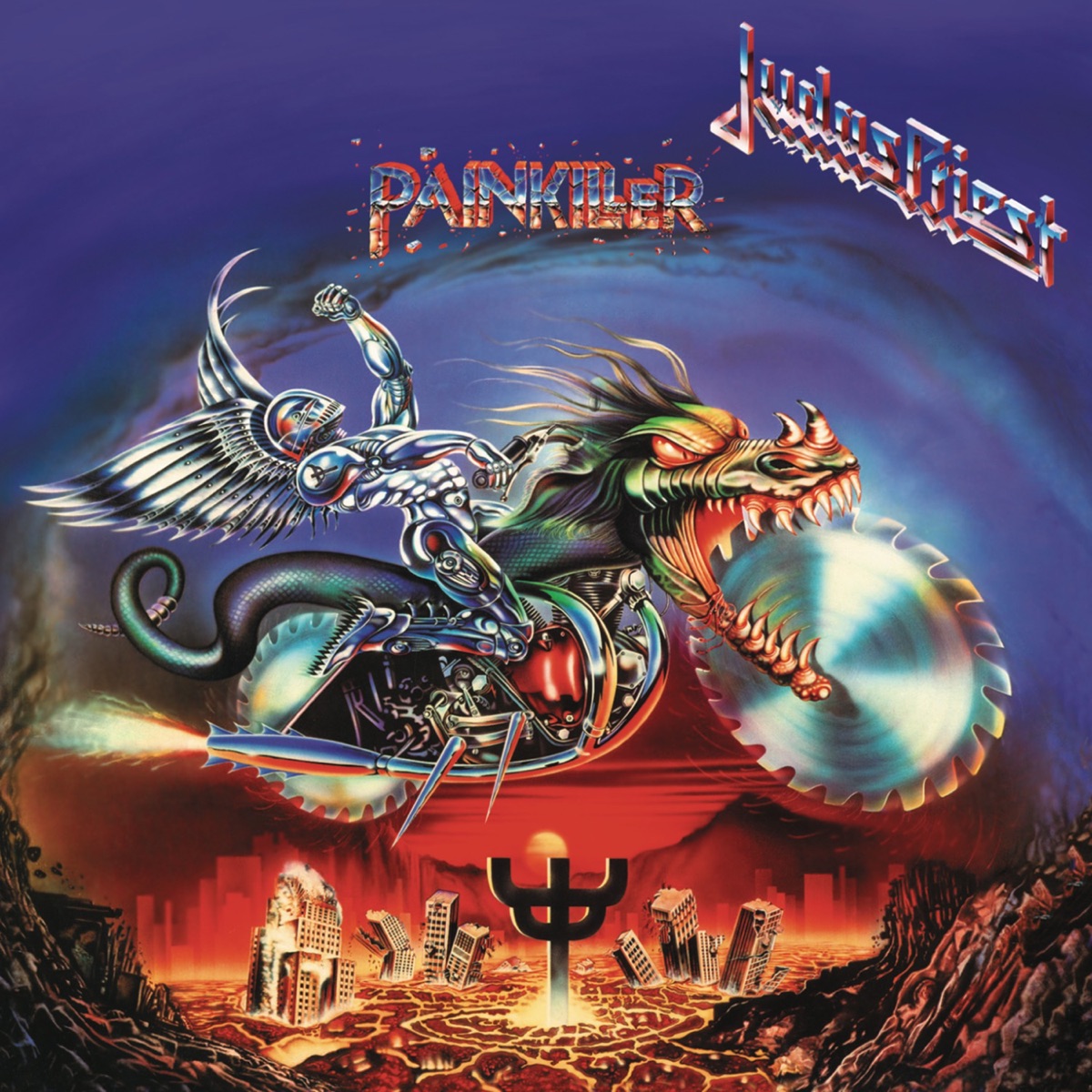
On the title track 'Painkiller', both Glenn Tipton and K.K. Downing recorded their parts through EMG 81 bridge pickups on Hamer solid-body guitars, feeding a signal chain that included a Rocktron Piranha and Mesa Boogie TriAxis rack preamps before hitting a cranked Marshall JCM800 head and a 4×12 Marshall 1960 cabinet. Producer Chris Tsangarides captured the guitars at Miraval Studios, using tight gain staging and a noise gate to keep the rapid, high-speed riffs articulate. The guitars sit front-and-center with a razor-sharp mid-range, cutting through the mix while retaining a tight low-end.
Tuning Standard (EADGBE)·Strings Ernie Ball RPS Slinkys .010‑.046
Signal chain · Riff
Original gear

1990 Hamer GT Phantom
Guitar
Glenn Tipton used a 1990 Hamer GT Phantom equipped with EMG 81 bridge humbucker, delivering the tight, high‑output tone heard on 'Painkiller'.

Rocktron Piranha (1985)
Preamp
The signal was routed through a Rocktron Piranha rack preamp, adding extra gain and tonal shaping before the Marshall head.
Mesa Boogie TriAxis (1990)
Preamp
A Mesa Boogie TriAxis rack unit was used after the Rocktron to provide additional high‑gain staging for the aggressive tone.

Marshall JCM800 (c. 1980)
Amplifier
The core of the guitar tone is a cranked Marshall JCM800 100‑watt head, delivering the classic British high‑gain crunch heard throughout the track.

Marshall 1960 4×12 Cabinet (c. 1970)
Cabinet
A Marshall 1960 4×12 cabinet loaded with Celestion speakers was paired with the JCM800 to project the aggressive mid‑forward tone.
Alternatives
Practical playing approach
Recreation guidance, not a claim about undocumented studio control positions.
- 1.Select the bridge pickup (EMG 81) for maximum output and tight response.
- 2.Drive the guitar volume to full and use the amp’s high‑gain channel to achieve searing sustain.
- 3.Maintain a tight alternate‑picking attack with palm‑muted chugs to match the song’s 200 BPM intensity.
- 4.Apply a fast wah sweep during lead passages for the signature vocal‑like phrasing.
- 5.Engage a noise gate to tighten the tone between fast note runs.
Frequently asked questions
What gear was used for the Painkiller guitar tone?
The available research points to 1990 Hamer GT Phantom into Rocktron Piranha (1985). The full reported signal chain and evidence links are listed on this page.
Are the original Painkiller amp settings documented?
Exact historical knob positions are not reliably documented for most recordings. ToneTwin does not publish generated values as studio fact; it creates playable settings only for the amp and pedals a player selects.
What tuning is Painkiller in?
The current research record lists Standard (EADGBE). ToneTwin keeps corrections open when reliable accounts disagree.
How do I recreate the Painkiller tone on my own gear?
Use the reported pickup, gain character, effects and signal-chain order as the target, then translate that target to your equipment. The matcher models controls for your selected rig rather than copying undocumented studio numbers.
Researched and reviewed by the ToneTwin Research Team.
Sources