Single-Coils vs Humbuckers: How Pickups Shape Your Tone
Your pickups are the first and biggest tone decision you make. Here's how single-coils and humbuckers actually differ, what each is best for, and how to get one sound out of the other.
By the ToneTwin Research Team · Evidence and uncertainty reviewed
Single-coils are brighter, clearer and more dynamic, with a faint background hum; humbuckers are thicker, louder and smoother, with no hum and more sustain. Single-coils suit funk, blues, country and sparkly clean tones; humbuckers suit rock, metal and warm jazz. Neither is better, they're different starting points, and your pickup choice shapes your tone more than almost anything else in your rig.
Before the amp, before pedals, the pickup decides the raw character of your sound. It's the first thing to get right and the hardest to fake later, so it's worth understanding what actually separates the two main types.
What a pickup actually does
A pickup is a set of magnets wrapped in fine wire that senses the steel strings vibrating and turns it into the signal your amp hears. How that coil is built, how it's wound and how many coils it uses, changes the result dramatically.
Single-coils: bright, clear, dynamic
A single-coil is one coil of wire. It's articulate and lively, with a glassy top end and a snappy attack, the Stratocaster and Telecaster sound. The trade-off is a faint 60-cycle hum, because the single coil also picks up electrical interference, which is the low buzz you hear when you stop playing.
- Character: bright, clear, percussive, very responsive to your picking.
- Best for: funk, country, blues, surf, sparkling clean and edge-of-breakup rhythm.
- Voices you know: Hendrix, SRV, John Mayer, Mark Knopfler, Nile Rodgers.
Humbuckers: thick, hot, smooth
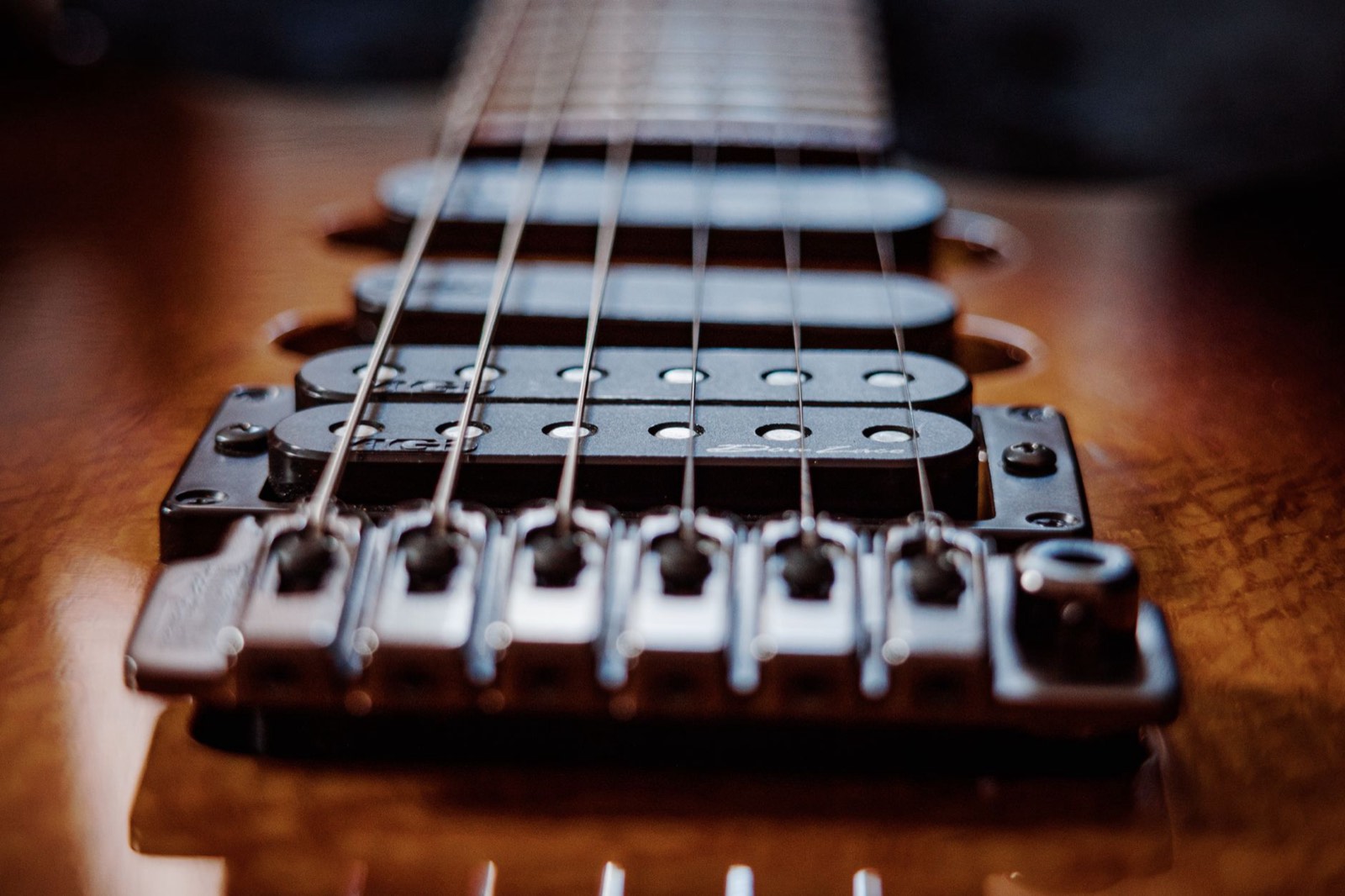
A humbucker uses two coils wired so their hum cancels out (it “bucks the hum”). The result is a hotter, thicker, smoother signal with more output and natural sustain, the Les Paul and SG sound. It pushes an amp into distortion more easily and stays quiet under high gain.
- Character: warm, thick, loud and smooth, with strong sustain and no hum.
- Best for: rock, hard rock, metal, and warm jazz on the neck pickup.
- Voices you know: Slash, Angus Young, Tony Iommi, Wes Montgomery, Zakk Wylde.
Side by side
| Single-coil | Humbucker | |
|---|---|---|
| Character | Bright, clear, snappy | Thick, warm, smooth |
| Output | Lower | Higher, drives the amp harder |
| Noise | Some 60-cycle hum | Hum-cancelling, quiet |
| Sustain | Shorter, articulate | Longer, compressed |
| Best for | Funk, blues, country, clean | Rock, metal, warm jazz |
Position matters as much as type
Where the pickup sits changes the sound as much as the type. The neck pickup is warmer and rounder (great for solos and jazz); the bridge pickup is brighter and more aggressive (great for rhythm and cut). A middle or in-between position gives the quacky, hollow tones single-coil guitars are loved for. So “single-coil vs humbucker” is really four or more starting points once you count position.
Can you get one sound from the other?
Partly. You can't fully turn one into the other, but you can lean:
- Single-coil toward humbucker: use the neck pickup, roll the tone knob back, and add midrange and a touch of gain at the amp to thicken it.
- Humbucker toward single-coil: use the bridge pickup, add treble, and if your guitar has a coil-split switch, split the humbucker for a brighter, more single-coil-like tone.
It gets you in the neighbourhood, not an exact copy, which is why the pickup is worth getting right at the source.
So which should you choose?
Match it to the music you play most. Funk, country, blues and clean tones point to single-coils; rock, metal and warm jazz point to humbuckers. Want both? An HSS guitar (a humbucker at the bridge, single-coils elsewhere) or a coil-split humbucker covers a lot of ground. There is no “better”, only what fits your sound.