Guitar Pedal Order: How to Set Up Your Signal Chain
The standard order to chain your guitar pedals, why each effect goes where it does, where a noise gate and volume pedal belong, and when to use the amp's effects loop.
By the ToneTwin Research Team · Evidence and uncertainty reviewed
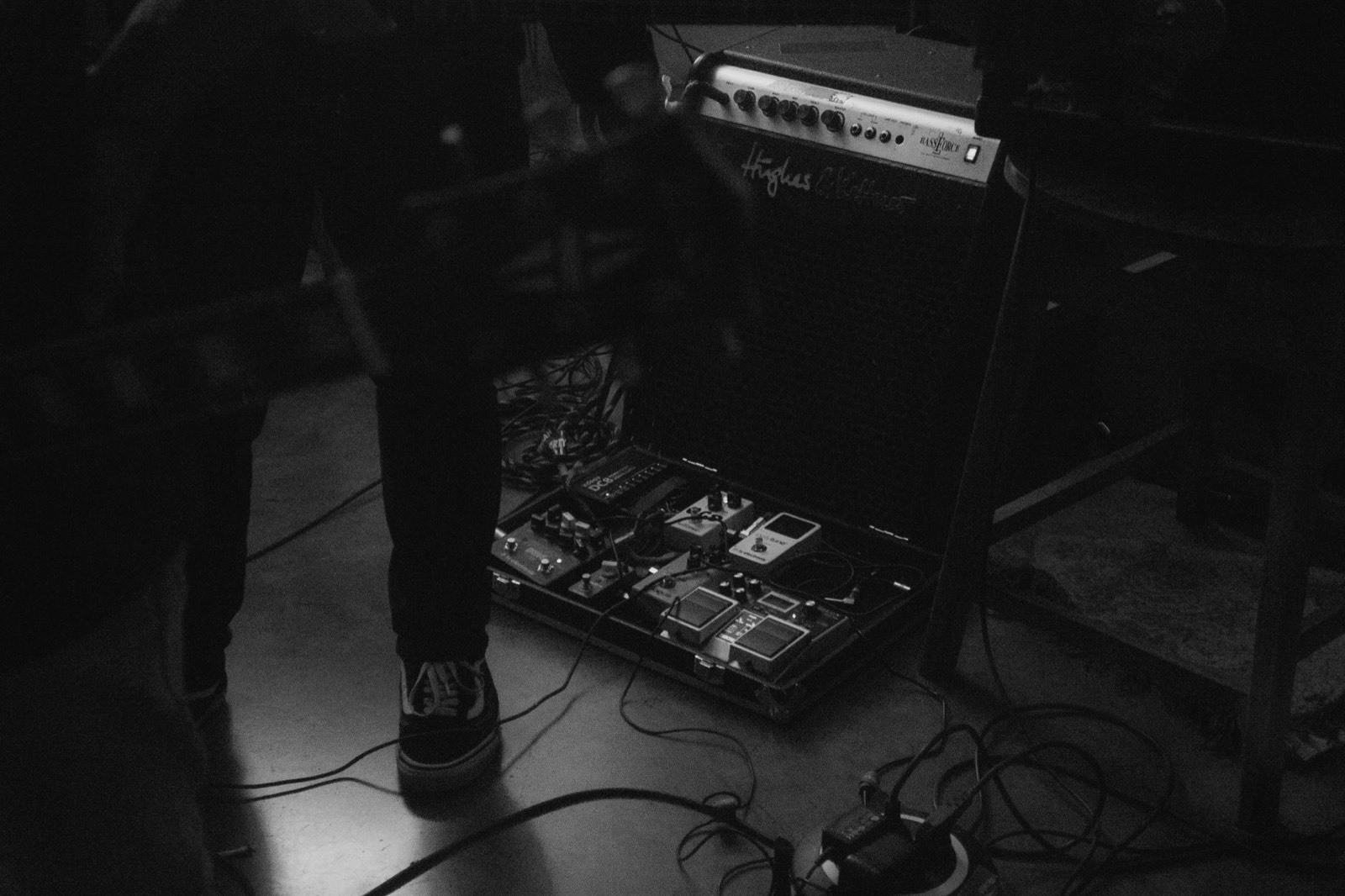
Two players with the identical pedals can sound completely different, because order changes the sound. Each pedal acts on whatever reaches it, so what comes before it matters. Here's the order that works, the reasoning behind it so you can adapt it, and the exceptions worth knowing.
The standard signal chain
From your guitar to your amp, the reliable default is:
- Tuner: first, so it reads a clean signal and can mute everything downstream.
- Filter, wah, pitch: wah, envelope filters and pitch shifters want your raw guitar signal to track properly.
- Compressor: evens out dynamics early, before dirt adds its own compression.
- Overdrive and distortion: the core of your dirt. Stack a lower-gain drive into a higher-gain one, not the reverse.
- Noise gate (optional): right after the dirt, to clamp the hiss that high gain adds.
- Modulation: chorus, phaser and flanger sit after distortion so they swirl the already-dirty tone.
- Delay and reverb: last, so echoes and ambience trail off naturally instead of being processed.
Why this order
Run delay before distortion and every echo gets distorted, smearing into noise. Run delay last and each repeat is a clean copy that fades out, which is what you actually want. The same logic applies to reverb.
A wah before distortion is the classic vocal, expressive wah; after distortion it's thinner and more drastic. Neither is wrong, but they are different sounds, and knowing the rule lets you choose on purpose. A compressor goes early so it controls your raw dynamics; put it after distortion and it mostly just pumps up noise.
Stacking overdrives
When you run two dirt pedals, order them low gain into high gain. A light overdrive (think a Tube Screamer style) in front of a bigger distortion tightens the low end and pushes the second pedal harder, which is the classic way to get a focused high-gain rhythm tone. Flip them and you mostly add mush.
The noise gate
A gate's job is to silence hiss and hum between notes, and high-gain pedals are the main culprit, so the gate usually sits right after your distortion. Many gates include a send/return loop: you place the loop around your dirt pedals so the gate listens to your clean guitar to decide when to open, while muting the noisy section. That tracks far more naturally than a gate sitting blind at the end.
The effects loop exception
If your amp distorts on its own (not from a pedal), put time-based effects in its effects loop instead of in front. The loop sits after the preamp, so your delay and reverb land on the already-distorted tone and stay clear. Delay in front of a cranked amp gets crushed into mush. This one move fixes a huge number of muddy high-gain rigs. With clean or pedal-driven distortion, running everything in front is perfectly fine.
Where the volume pedal goes
It depends what you want. Early in the chain (before dirt) it acts like your guitar's volume knob, cleaning up the gain as you roll back. After the dirt and before delay/reverb it works as a true volume control for swells and level changes without affecting your amount of distortion. For volume swells into delay, put it before the delay so the repeats swell too.
When to break the rules
Plenty of iconic tones ignore all of this. Fuzz often wants to be first, even before a wah, and can react badly to a buffer or wah in front of it. Some players love the chaos of modulation before dirt. Treat the standard order as the dependable default, then experiment once you know what each move does.