Get this tone on your gear
Keep this song selected. Choose your guitar and amp for playable settings. Subscription required.
The recording
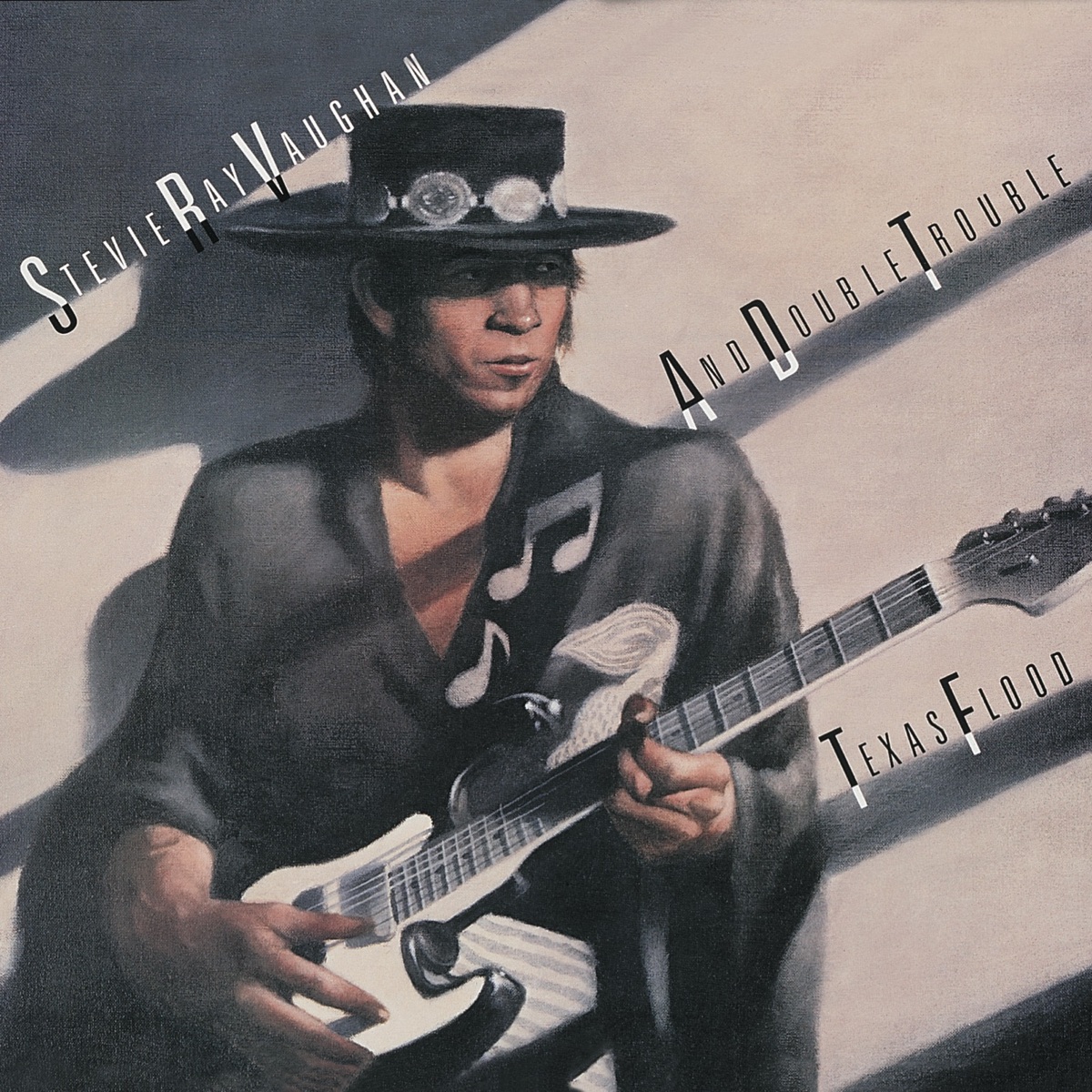
Recorded at Austin’s Arlyn Studios in early 1983, the title track was captured almost entirely live with Stevie playing his battered 1963 “Number One” Strat tuned down a half‑step. He ran the guitar through an Ibanez Tube Screamer into a Howard Dumble Steel‑String Special for the soaring solo, while the clean rhythm parts were taken straight from a Fender Vibroverb, its built‑in spring reverb adding depth. Engineer Richard Mullen used minimal mic placement to preserve the raw dynamics, resulting in a raw, dynamic blues performance.
Tuning E♭ Standard (E♭ A♭ D♭ G♭ B♭ E♭)·Strings .012-.054
Signal chain · Solo
Original gear

1963 Fender Stratocaster ('Number One')
Guitar
Stevie's primary instrument on Texas Flood, a 1963 Fender Stratocaster with a 1962 neck, heavily worn and nicknamed "Number One", delivering his signature biting tone.

Ibanez Tube Screamer TS-808
Overdrive Pedal
A classic overdrive boost that SRV employed to drive his Dumble amp into saturated sustain for the Texas Flood solo, shaping the mid‑range bite.

Howard Dumble Steel String Special (custom)
Amplifier
SRV used a Howard Dumble Steel String Special in the Texas Flood sessions; its high‑gain channel, combined with the Tube Screamer, produced the thick, singing sustain heard on the title track.
Fender Vibroverb (1965)
Combo Amp
A Fender Vibroverb provided the clean, slightly reverberant rhythm tone on Texas Flood, with the amp’s built‑in spring reverb adding depth to SRV’s chordal work.
Alternatives
Practical playing approach
Recreation guidance, not a claim about undocumented studio control positions.
- 1.Tune the guitar to E♭ Standard (E♭ A♭ D♭ G♭ B♭ E♭).
- 2.Select the bridge pickup and roll the tone knob back slightly for a tighter bite.
- 3.Engage an Ibanez Tube Screamer at medium drive and set the tone to the midpoint.
- 4.Attack the strings with a strong pick attack and use wide, slow bends to let the amp’s natural compression sing.
- 5.Let notes ring and decay naturally; avoid excessive compression or over‑editing.
Frequently asked questions
What gear was used for the Texas Flood guitar tone?
The available research points to 1963 Fender Stratocaster ('Number One') into Howard Dumble Steel String Special (custom). The full reported signal chain and evidence links are listed on this page.
Are the original Texas Flood amp settings documented?
Exact historical knob positions are not reliably documented for most recordings. ToneTwin does not publish generated values as studio fact; it creates playable settings only for the amp and pedals a player selects.
What tuning is Texas Flood in?
The current research record lists E♭ Standard (E♭ A♭ D♭ G♭ B♭ E♭). ToneTwin keeps corrections open when reliable accounts disagree.
How do I recreate the Texas Flood tone on my own gear?
Use the reported pickup, gain character, effects and signal-chain order as the target, then translate that target to your equipment. The matcher models controls for your selected rig rather than copying undocumented studio numbers.
Researched and reviewed by the ToneTwin Research Team.
Sources